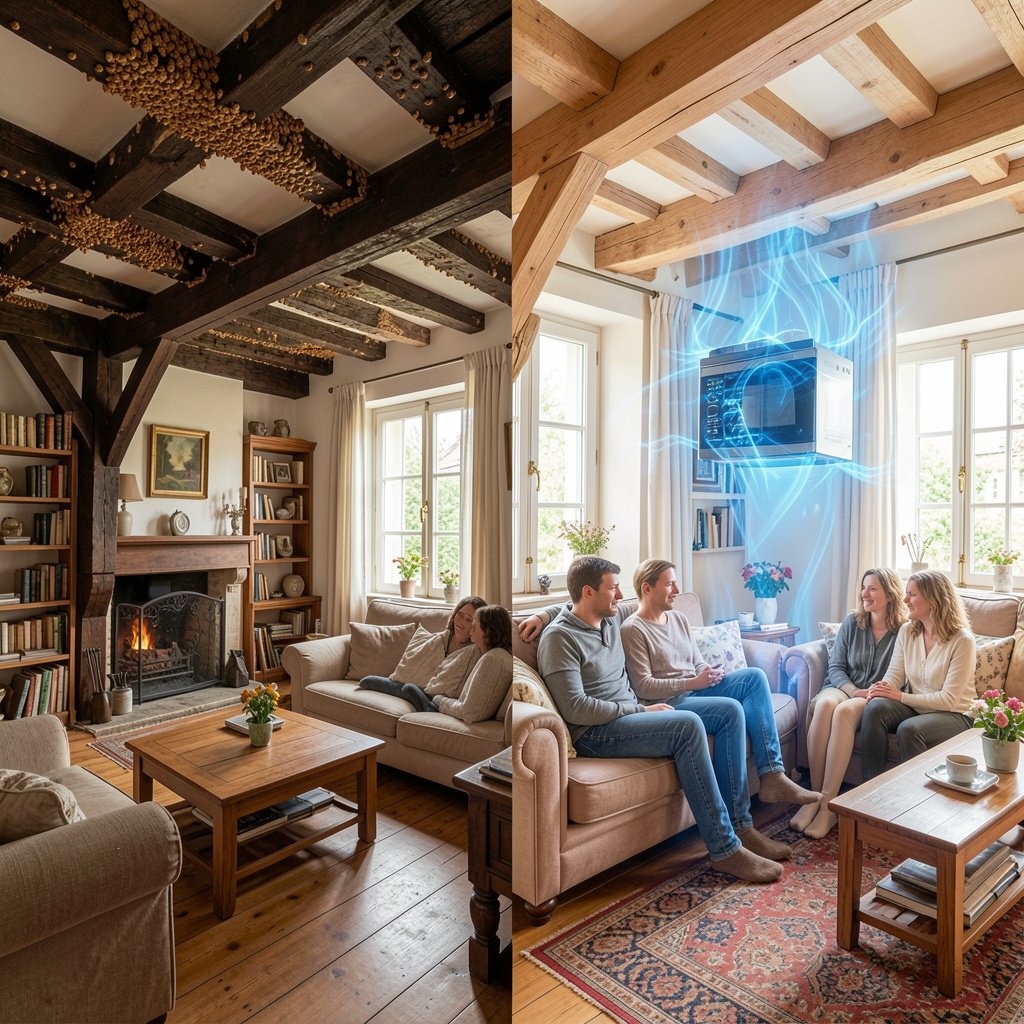
Woodworm infestations are a serious concern for homeowners, businesses, and conservation professionals. Left untreated, wood-boring beetles can weaken timber structures, damage valuable furniture, and compromise the integrity of historic buildings. For decades, chemical insecticides have been the standard solution for controlling these pests. While they can be effective in certain situations, many property owners overlook the long-term costs associated with repeated chemical treatments.
These costs are not always financial. They can include ongoing maintenance, repeated applications, disruption to daily life, environmental concerns, and the gradual impact on valuable wooden structures. As a result, many people are turning to modern, chemical-free alternatives such as microwave technology. Shashel offers an innovative solution that eliminates active woodworm infestations using controlled microwave energy, reducing many of the long-term challenges associated with traditional chemical treatments.
The Traditional Approach to Woodworm Control
Chemical woodworm treatments typically involve applying liquid insecticides or preservatives to affected timber. These products are designed to kill active insects and, in some cases, provide temporary protection against future infestations.
While this approach has been widely used for many years, its effectiveness depends on several factors, including the type of wood, the depth of the infestation, and whether the chemicals can reach the insects hidden inside the timber.
For surface infestations, chemical treatments may be appropriate. However, woodworm larvae often spend years deep within the wood, where surface-applied products may have limited reach.
Hidden Cost #1: Repeated Applications
One of the biggest long-term considerations with chemical treatments is the potential need for repeated applications.
Over time:
- Protective coatings may wear away.
- New infestations can occur.
- Weather exposure can reduce effectiveness on exterior timber.
- Previously untreated areas may become vulnerable.
Each additional treatment requires more time, labor, and planning.
By comparison, Shashel microwave technology targets active infestations directly inside the timber, helping eliminate insects without relying on repeated chemical applications for the same localized outbreak.
Hidden Cost #2: Surface-Level Protection
Many chemical products work primarily where they are applied.
Woodworm larvae, however, often live deep inside:
- Roof beams
- Floor joists
- Structural framing
- Thick timber supports
- Antique furniture
If the active insects remain beyond the effective penetration depth of a surface treatment, they may continue feeding inside the wood.
Microwave technology addresses this challenge differently. Instead of coating the surface, Shashel systems use controlled electromagnetic energy to generate heat within the timber, targeting moisture-rich insects where they live.
Hidden Cost #3: Property Disruption
Applying chemical treatments often requires preparation before work begins.
Depending on the project, this may involve:
- Moving furniture
- Protecting nearby belongings
- Restricting access to treated areas
- Allowing drying or curing time
In commercial buildings, museums, churches, or historic properties, these interruptions can become both inconvenient and costly.
Because microwave treatment is localized, Shashel helps reduce disruption by focusing only on the affected sections of timber whenever appropriate.
Hidden Cost #4: Chemical Residues
Many property owners today prefer cleaner indoor environments.
Traditional insecticides may leave residues on treated wood, making some people hesitant to use them in:
- Family homes
- Children’s rooms
- Museums
- Heritage buildings
- Antique furniture collections
- Educational facilities
Microwave treatment requires no pesticides, no fumigants, and no toxic preservatives, leaving no chemical residues behind.
Hidden Cost #5: Environmental Impact
Sustainability has become an important consideration in modern building maintenance.
Repeated use of chemical insecticides contributes to:
- Increased chemical consumption
- Additional packaging waste
- Environmental handling requirements
- Greater reliance on pesticide-based maintenance
As environmental awareness grows, many homeowners are choosing methods that reduce chemical use while still providing effective pest control.
Shashel supports this approach by offering a chemical-free solution that relies on controlled microwave energy instead of pesticides.
Hidden Cost #6: Historic Building Preservation
Historic buildings require particularly careful treatment.
Original beams, handcrafted timber, decorative ceilings, and antique woodwork are often irreplaceable.
Conservation professionals generally prefer methods that preserve original materials while minimizing unnecessary intervention.
Repeated chemical applications may not always align with modern conservation principles, especially when dealing with valuable heritage structures.
Microwave technology allows Shashel to treat active infestations without saturating historic timber with chemical products, helping preserve the authenticity of important buildings.
A Modern Alternative: Microwave Woodworm Treatment
Microwave treatment uses a completely different scientific principle.
Instead of poisoning insects, controlled microwave energy passes through the timber and interacts primarily with moisture inside living organisms.
Woodworm larvae contain significantly more moisture than seasoned structural wood. As they absorb microwave energy, their internal temperature rises until it reaches a level that the insects cannot survive.
This process can eliminate:
- Eggs
- Larvae
- Pupae
- Adult beetles present within the treated timber
Because the treatment targets active insects directly, it provides an efficient, chemical-free alternative for many localized infestations.
Benefits Beyond Cost Savings
Choosing microwave technology offers advantages that extend beyond reducing chemical use.
Property owners benefit from:
- No toxic pesticides
- No chemical odors
- No harmful residues
- Deep penetration into timber
- Targeted treatment
- Environmentally responsible operation
- Minimal disruption to occupied buildings
These benefits have made Shashel a trusted choice for homeowners, restoration professionals, and conservation specialists across a wide range of applications.
Protecting Timber for the Long Term
Regardless of the treatment method used, preventing future infestations remains essential.
Property owners should:
- Keep timber dry.
- Repair roof and plumbing leaks promptly.
- Improve ventilation.
- Reduce excess indoor humidity.
- Inspect wooden structures regularly.
- Address signs of beetle activity early.
Combining preventive maintenance with effective treatment helps extend the life of wooden structures and reduces the risk of future damage.
Investing in Sustainable Wood Preservation
The goal of woodworm treatment is not simply to eliminate insects—it is to preserve valuable timber for years to come.
Modern property owners increasingly seek solutions that are:
- Effective
- Safe
- Environmentally responsible
- Suitable for historic buildings
- Compatible with long-term maintenance strategies
Microwave technology reflects this shift by providing a non-chemical approach that focuses on preserving both the timber and the surrounding environment.
Through continued innovation, Shashel is helping redefine modern wood preservation with advanced microwave systems designed for today’s sustainability standards.
Conclusion
Chemical woodworm treatments have played an important role in pest control for many years, but their long-term costs extend beyond the initial application. Repeated treatments, surface limitations, chemical residues, environmental considerations, and disruption to valuable properties all contribute to the overall impact over time.
